What the NZ curing temperature means
Concrete NZ’s guide describes tank or fog-room curing at 21 ± 2°C after demoulding, ahead of strength testing at 7 and 28 days. This controlled procedure supports consistent testing; it is not an instruction to assume that the structure is curing at 21°C.
The guide also specifies protection and initial temperature control for specimens made on site. Simply leaving cylinders outdoors is not automatically compliant curing. Standard-cured results and evidence about early strength in the structure answer different questions; matching complements, rather than replaces, the required acceptance tests.
The weather is only part of the story
Concrete generates heat as it hydrates. A substantial pour and a small cylinder can retain and lose that heat differently—even when they sit beside each other. The American Concrete Institute warns that field-cured specimens may not reliably represent a large concrete mass, particularly in cold weather, and identifies temperature-matched curing as an available approach. Read ACI’s explanation of specimen curing.
A break measures the specimen’s strength. A colder specimen may develop strength more slowly than the pour. Without temperature records, it is difficult to know how representative that result is.
What Maturity Master does
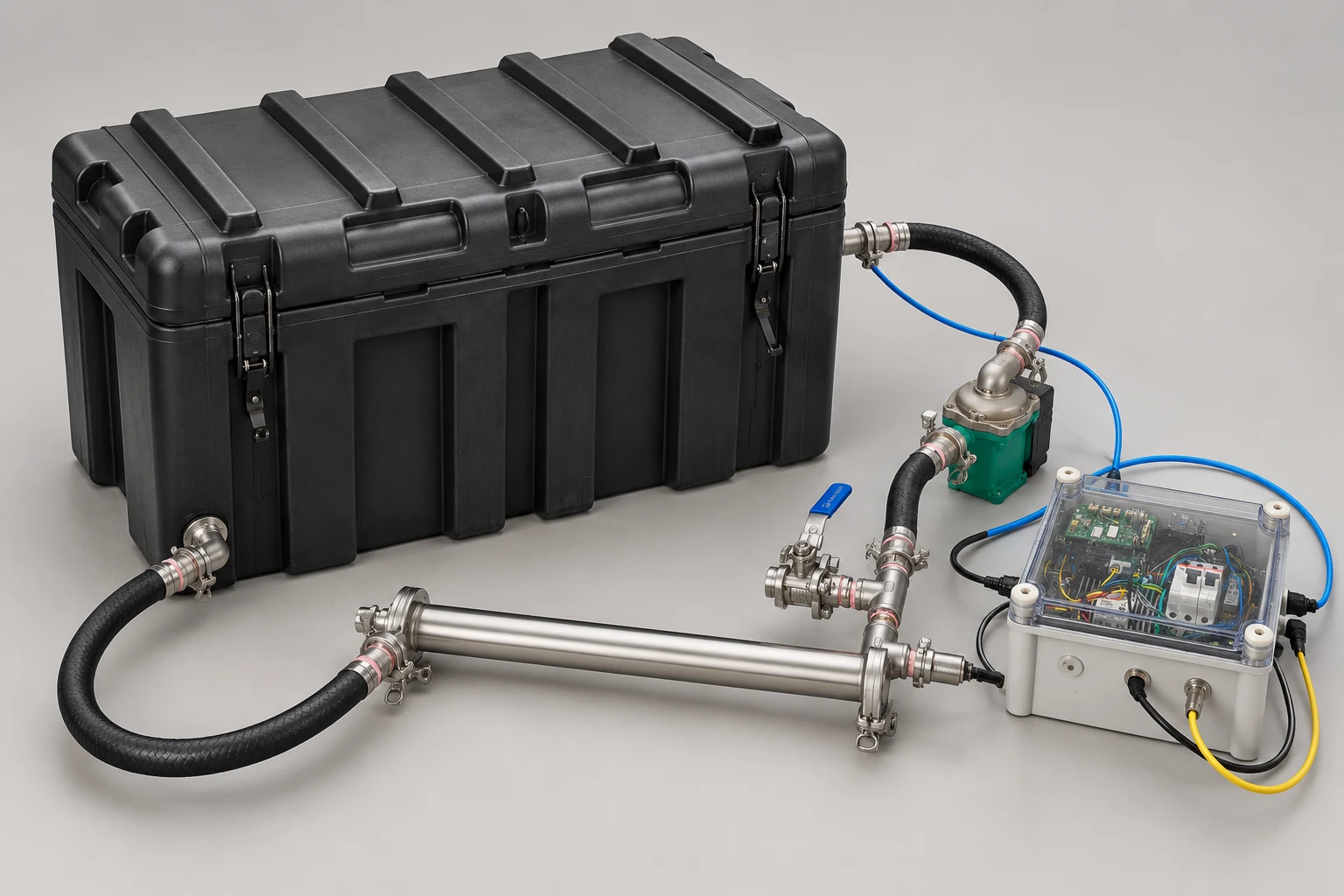
Our Match Source measures temperature at a selected location in the concrete. The Matching Unit uses that reported temperature as the target for the water bath holding the test specimens. The website brings the target and measured water temperature together in a time-based graph, so the team can review how closely the bath followed the pour.
The aim is not to heat cylinders to an arbitrary temperature to obtain a quicker result. It is to follow a measured temperature history while keeping the physical cylinder break as part of the evidence.
Why that can be better evidence
Compared with leaving specimens exposed to different temperature conditions, properly controlled matching can reduce one important source of uncertainty: their thermal history. See ACI’s guidance.
For suppliers and contractors, our goal is a clearer conversation: review the recorded temperatures alongside the break result, rather than assuming that being on the same site means being cured alike. Any reduction in waiting time must be demonstrated on the project—not promised in advance.
The right location and the right decision
Matching one probe does not represent every part of a pour. The engineer should agree the relevant locations, curing procedure, testing and acceptance criteria. The warmest core must not automatically stand in for a cooler, critical area. Bath temperature alone also does not prove that a specimen’s internal temperature matches it exactly; thermal lag, moisture and specimen handling still matter.
ACI distinguishes standard-cured specimens used for acceptance from field specimens used for decisions such as stripping or prestressing, where curing should reflect the structure’s environment as closely as possible. Read the distinction in ACI’s curing guidance.
Matching and maturity are different tools
Matching controls the curing environment of physical test specimens. The maturity method uses the concrete’s recorded time and temperature history with a strength relationship established for that mix. It requires appropriate calibration and curing conditions; a temperature trace alone is not a strength result. Read ACI’s explanation of maturity and curing.